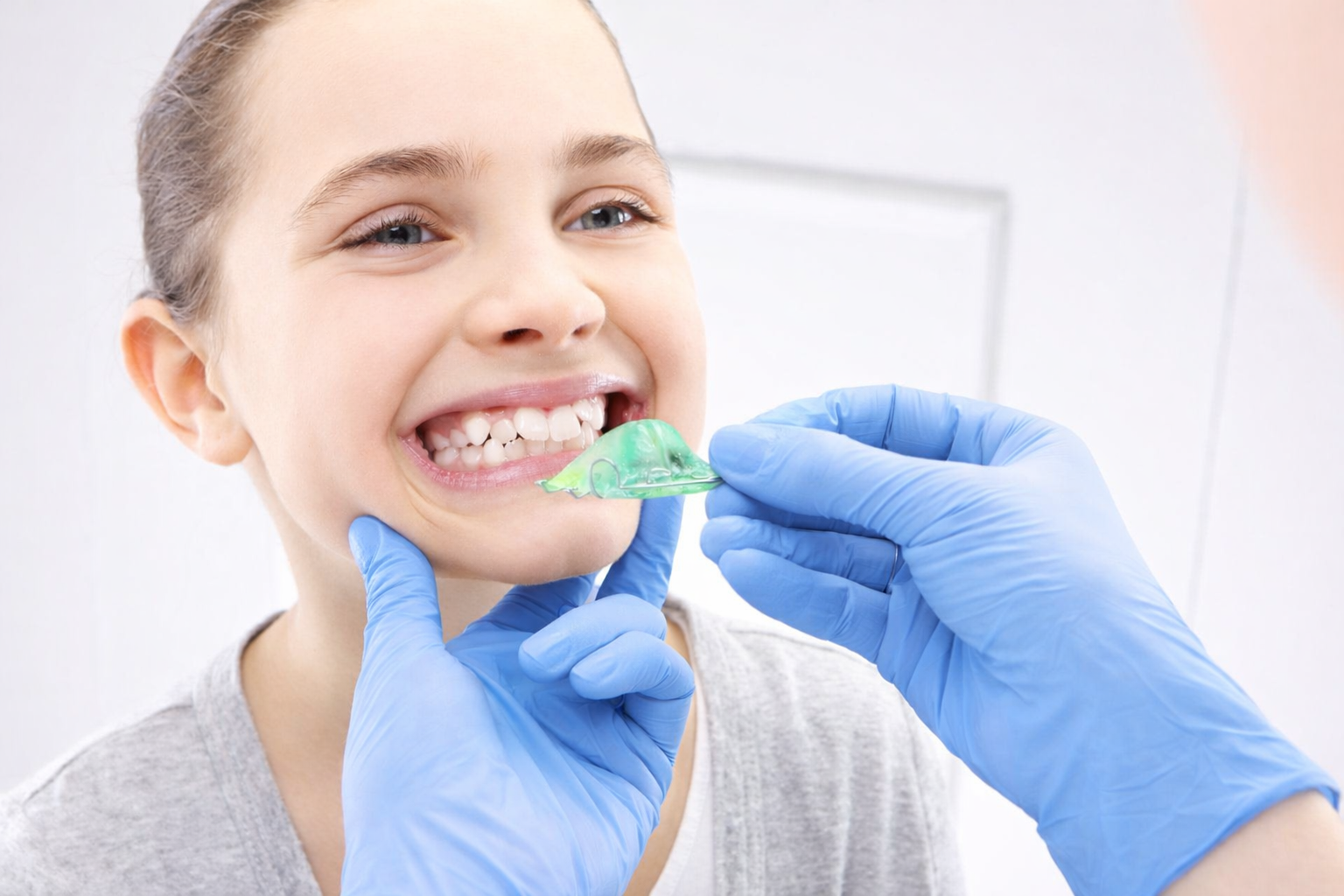
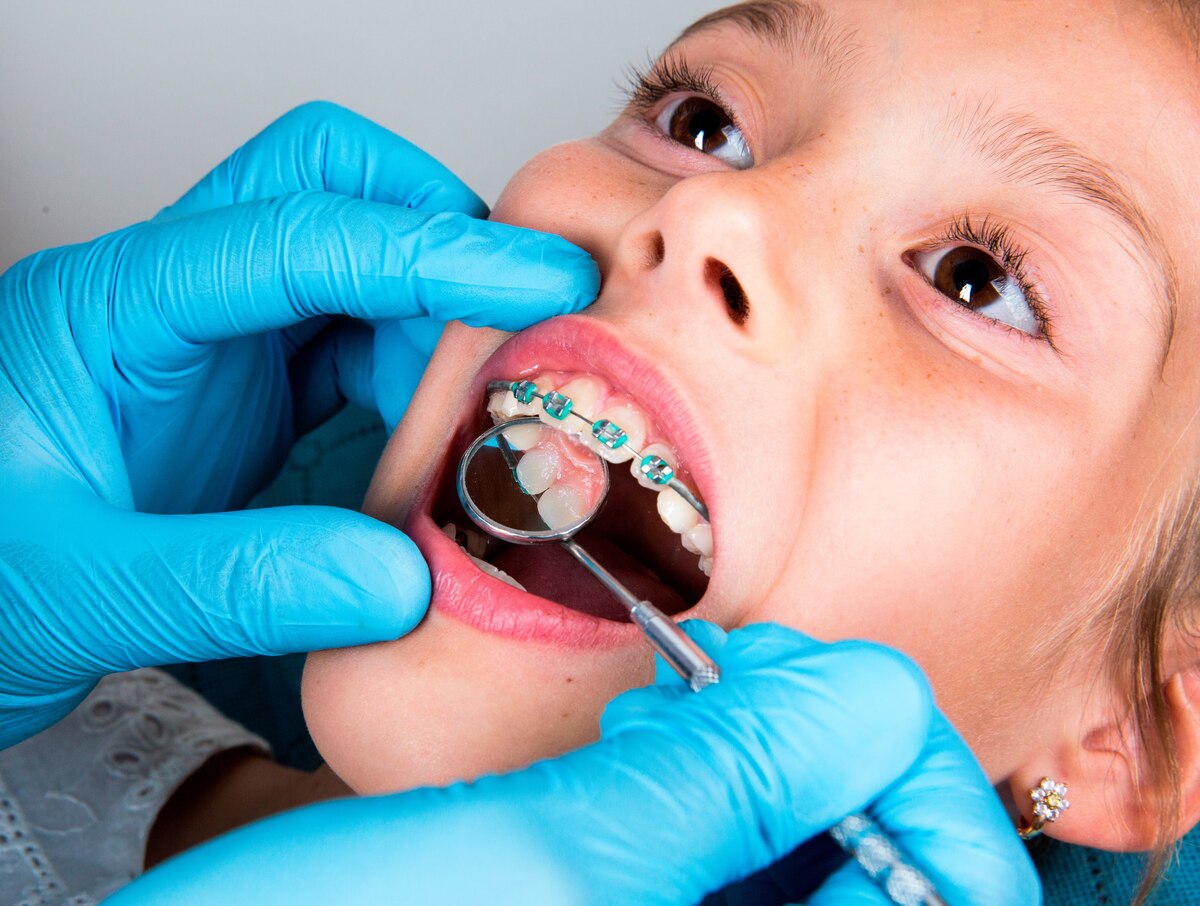
The American Association of Orthodontists recommends a first evaluation at age 7. The earlier we detect, the simpler the correction.
At age 7, the first permanent molars appear and the bite begins to take shape. This is the ideal time to detect any growth or alignment problems.
Early interceptive treatment can prevent future complications and significantly reduce the duration and complexity of later orthodontic treatment.
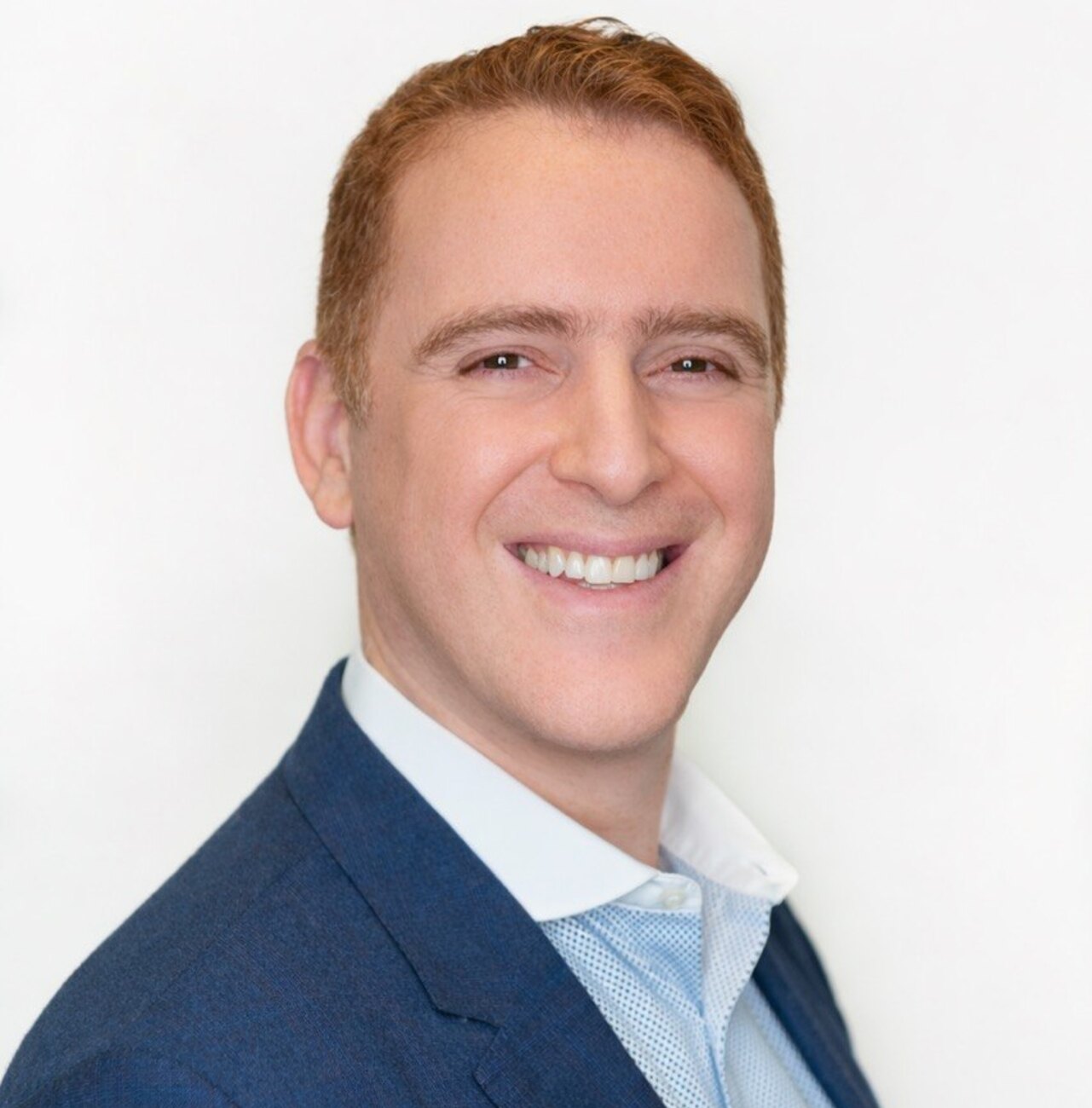
Dr Benguira has unique expertise acquired over 15 years at Sainte-Justine Hospital, specializing in treating children of all ages.
During the first consultation, Dr Benguira thoroughly examines several aspects of your child's dental and facial development:
This early evaluation allows us to intervene at the optimal time to guide growth and simplify future treatment.
Interceptive orthodontics allows us to intervene when your child's growth is our greatest ally. Instead of waiting for all problems to develop, we act in two strategic phases for optimal results.
Age: Between 6 and 9 years old, while the jaw bones are actively growing.
Duration: 6 to 18 months depending on the problem to correct.
The goal of Phase 1 is not to perfect the final alignment, but to create ideal conditions for permanent teeth to grow in correctly. At this age, the bones are still malleable and respond very well to orthopedic appliances.
Problems treated in Phase 1:
Age: During adolescence, once all permanent teeth are in place.
Duration: Generally shorter thanks to Phase 1.
Phase 2 aims to perfect the final alignment of all permanent teeth and optimize the bite. It uses fixed brackets (braces) or clear aligners.
Thanks to the work done in Phase 1, this treatment is often:
💡 Good to know: Between the two phases, an observation period allows us to monitor growth and permanent teeth eruption. No appliance is worn during this period.
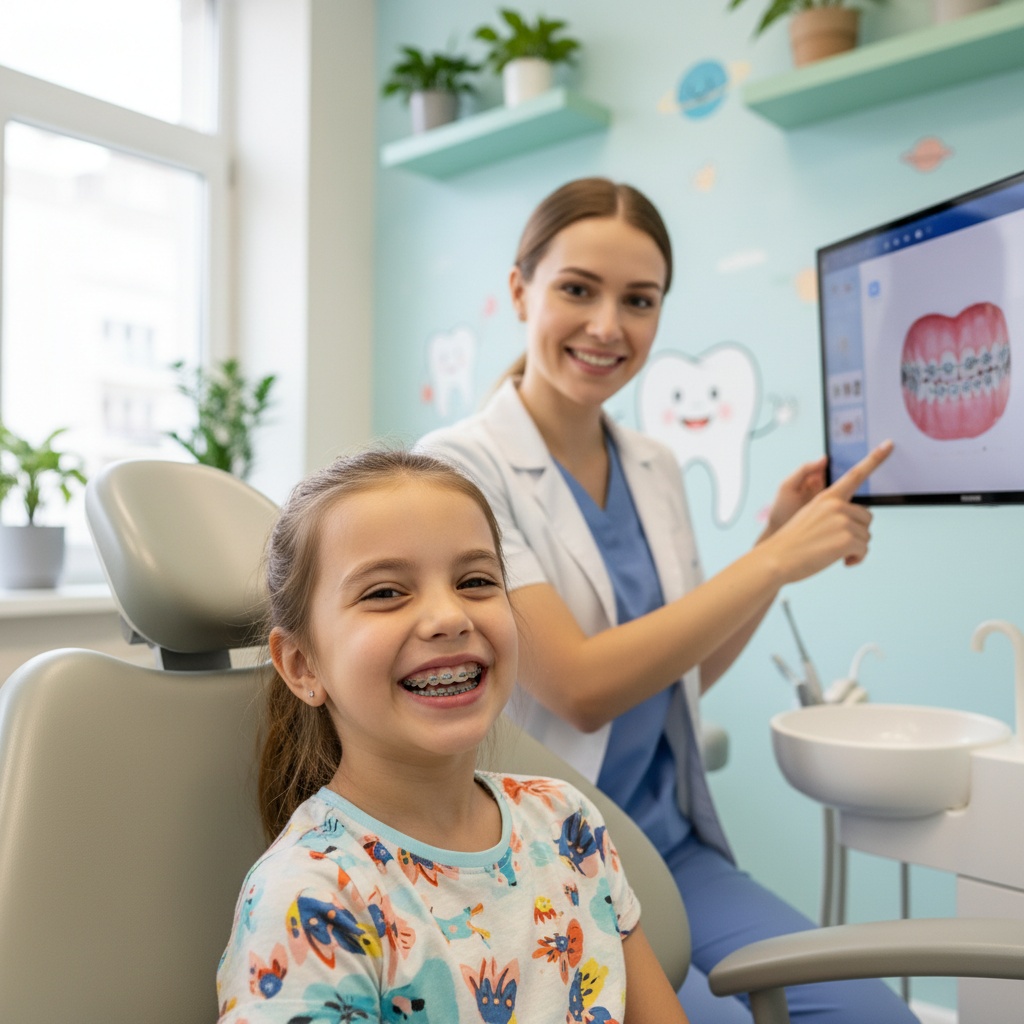
By guiding jaw growth early, orthognathic surgery in adulthood can often be avoided.
Palatal expansion in children is simple and effective. It creates space for permanent teeth and improves nasal breathing.
Chewing, breathing and speech are optimized. Some children even see their school focus improve.
Protruding teeth are vulnerable to trauma. Early correction significantly reduces the risk of dental fracture.
Based on your child's diagnosis, Dr Benguira will choose the best-suited appliance to correct the problem at the optimal time during growth.
The rapid palatal expander (RPE) is one of the most commonly used appliances in pediatric orthodontics. Fixed to the palate, it gradually widens the upper jaw by acting directly on the palatal suture, which is still flexible in children.
Indications:
💡 Good to know: Palatal expansion is only effective in growing children. In adults, the suture is fused and a surgical approach may be necessary. This is why it is crucial to intervene at the right time.
When a child loses a baby tooth prematurely (cavity, trauma), the adjacent teeth can drift and block the space meant for the permanent tooth. The space maintainer prevents this problem.
Types of maintainers:
Result: the permanent tooth erupts normally in the preserved space, avoiding dental crowding and more complex orthodontic treatment.
The face mask is an extra-oral appliance used to correct prognathism (skeletal Class III) in growing children. It stimulates upper jaw growth by pulling it forward.
How it works:
Results:
💡 Treatment window: The face mask is most effective between ages 7 and 10, when upper jaw growth can still be stimulated. After puberty, this option is no longer available.
Tongue thrust is a habit where the child pushes their tongue against the front teeth when swallowing. This repeated force (we swallow more than 1,000 times a day) can cause significant deformities.
Consequences of tongue thrust:
Our approach: We identify tongue thrust from the initial consultation. Myofunctional re-education exercises combined, when needed, with an orthodontic appliance (lingual crib or Bluegrass appliance) help correct this habit and ensure treatment stability.
Dr Benguira and his team are trained to support children with gentleness, patience and professionalism.
15 years of experience at Sainte-Justine Hospital, specializing in treating children and complex needs.
Radiation-free 3D scanner, low-dose digital X-rays, and protocols adapted for the youngest patients.
Warm and welcoming environment, team trained in communicating with children, age-appropriate explanations.
Recognized experience with children with ADHD, autism, Down syndrome or other special conditions.
A clear, transparent path adapted to your child's pace.
First meeting at no charge to get acquainted and discuss your concerns.
Clinical exam, X-rays and 3D scan for a precise and complete diagnosis.
Detailed presentation of the recommended treatment plan, costs and duration.
Start of treatment with appliances adapted to your child's age and needs.
Follow-up appointments to adjust treatment and support growth.
Some signs warrant an orthodontic consultation without waiting until age 7. If you notice any of these problems, book an appointment quickly:
Early intervention can avoid heavier and longer treatments during adolescence.
No, it's never too early if you have concerns. Although the recommended age is 7, some problems warrant an earlier consultation, such as a deviated jaw, an open bite or persistent thumb sucking. An evaluation helps determine the optimal time to intervene.
Yes, absolutely. The initial orthodontic consultation is free with no obligation. It allows us to get acquainted, examine your child and discuss your concerns. If additional tests are needed (X-rays, 3D scan), they will be offered at a subsequent appointment with a cost estimate.
If interceptive treatment is recommended, we will present a detailed plan including the objectives, estimated duration, proposed appliances and costs. You will have all the time you need to ask your questions and make an informed decision. We never start treatment without your full consent.
Modern orthodontic treatments are designed to be comfortable. There may be slight sensitivity during the first few days after placing an appliance or after an adjustment, but it is generally minor and resolves quickly. We use modern techniques and materials to minimize discomfort.
Duration varies depending on the nature of the problem. Early interceptive treatment can last 6 to 18 months, while complete treatment with braces during adolescence generally lasts 18 to 24 months. Early treatment can often reduce the duration and complexity of future treatment.
Yes, absolutely. Dr Benguira has extensive experience treating children with ADHD, autism, Down syndrome and other special needs, acquired during his 15 years at Sainte-Justine Hospital. We adapt our approach, appointment duration and appliances used to ensure comfort and treatment success.
Free orthodontic consultation • Pediatric expertise • Special needs welcome • Gentle technology
Orthodontiste certifié avec plus de 20 ans d'expérience, Dr Benguira a complété sa formation en orthodontie à l'Université de Montréal après un doctorat en médecine dentaire. Spécialiste reconnu sur la Rive-Nord, il combine expertise clinique et technologies de pointe pour offrir des résultats exceptionnels à chaque patient.