A poking wire, a loose bracket, unusual pain? Don't panic. Most orthodontic emergencies can be managed at home while waiting for your appointment. Here is a step-by-step guide with photos for every situation.
During business hours — for after-hours emergencies, follow the voicemail instructions.
These videos show you step by step how to handle the most common emergency situations in orthodontics.
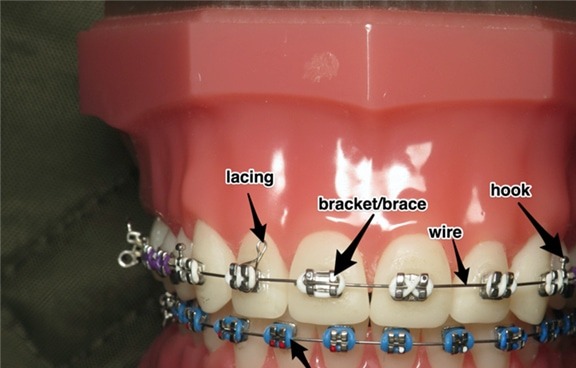
Before managing an emergency, it helps to know the parts of your orthodontic appliance:
Identifying the problematic piece will help you better describe the situation to our team.
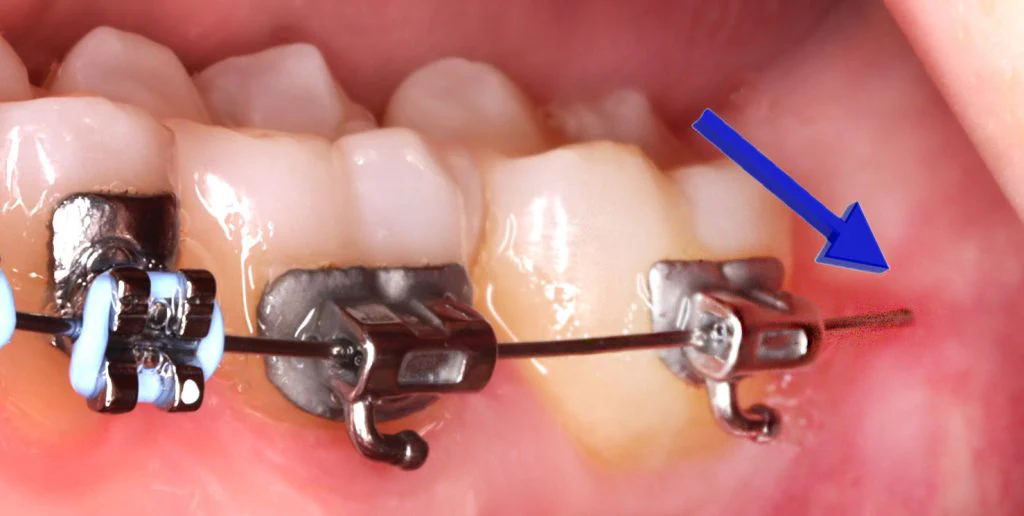
This is the most common situation. The wire extends past the last bracket or molar tube and irritates your cheek, tongue, or gum. This often happens when the teeth are moving — it is actually a sign that treatment is progressing!
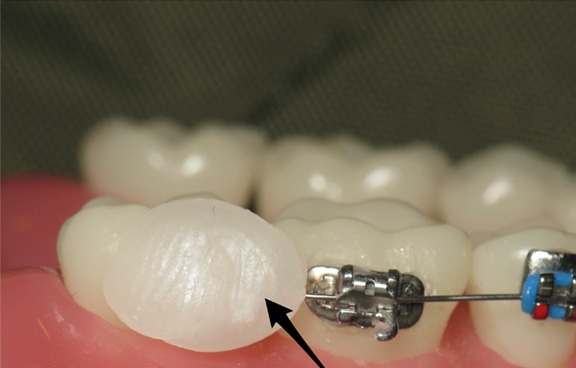
Dry the area with a tissue, then apply a small ball of wax over the protruding end of the wire. The wax creates a protective barrier between the wire and your inner cheek.
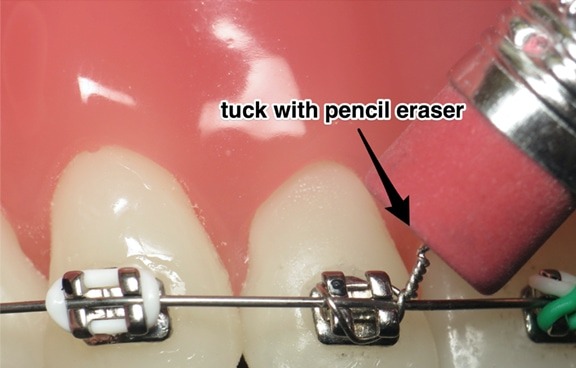
Use the rounded end of a pencil eraser to gently push the wire back toward the tooth. Press firmly but gently.
If the wire is causing significant pain and wax is not enough, cut the excess with sterilized nail clippers (rubbing alcohol). Ask someone to help you and be careful not to swallow the cut piece.
Orthodontic wax is the universal solution for almost all irritations caused by your braces. It is included in your starter kit and is also available at any pharmacy if you run out.
Hygiene is essential before touching the inside of your mouth.
Use a tissue or gauze to dry the bracket or wire. Wax adheres better to a dry surface.
Take a pea-sized piece of wax and roll it between your fingers to warm it up.
Press the ball of wax directly onto the problematic bracket or wire. The wax should completely cover the area.
Replace the wax after meals and before brushing. It is non-toxic — no danger if you accidentally swallow it.
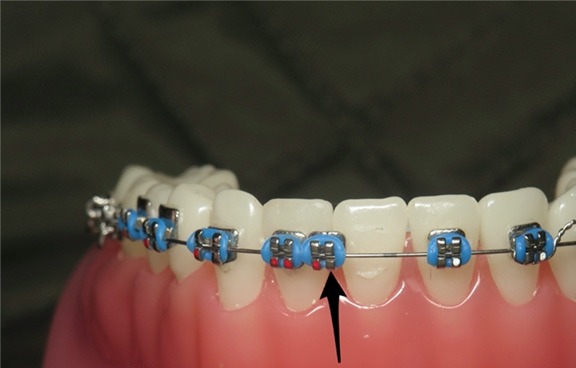
A bracket can come loose from the tooth, often after biting into something hard. It usually remains attached to the wire and slides along it.
Leave it in place. If it moves and causes irritation, apply orthodontic wax to stabilize it. Call us to schedule a rebonding appointment.
Keep it! Place it in a small bag or envelope and bring it to your next appointment. If the wire irritates without the bracket, apply wax.
The wire may then protrude and poke your cheek. Cut the excess wire with sterilized nail clippers or apply wax in the meantime. Contact us promptly.
A detached bracket is not a serious emergency, but it should be rebonded within a reasonable time frame to avoid delaying treatment.
When the wire slightly protrudes from the molar tube or an elastic hook is irritating your cheek, you can often reposition it yourself.
The rounded end of the eraser is the perfect tool — firm enough to push the wire, soft enough not to damage it.
Use a mirror and good lighting. If possible, ask someone to help you.
Press on the wire toward the tooth with the eraser, pushing it toward the gum. The wire should slide back under the tube or bracket.
This technique also works for elastic hooks and metal ligatures that have shifted. If you cannot manage it, apply wax and contact us.
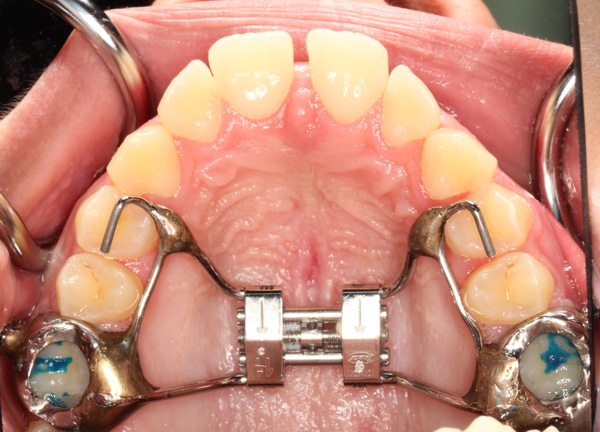
The palatal expansion appliance (or expander) is cemented onto the molars using bands or bonding. It can happen that one side — or both — comes loose. This is a fairly common situation, especially in children.
Stop the activations immediately (screw turns). The appliance still holds on the other side, but the forces are no longer balanced. Do not try to re-cement it yourself. Contact us promptly to schedule a rebonding — ideally within 48 hours.
Carefully remove the appliance from the mouth to prevent swallowing it or injury. Keep it safely in a rigid container and call us as soon as possible. The sooner we re-cement it, the less progress is lost.
If it feels slightly mobile but stays in place, stop the activations and avoid hard or sticky foods. Contact us to check if it needs to be re-cemented.
Important: Never try to re-cement the appliance with household glue or over-the-counter dental cement. The rebonding must be done in the clinic to ensure proper fit and adequate forces.
It is normal to feel discomfort during the first few days after an adjustment or when braces are first placed. Here is how to manage the pain.
Braces can cause small sores inside the mouth during the adjustment period.
The simplest and most effective remedy for mouth irritations
Dissolve in a glass (250 ml) of warm water.
Gently swish around your mouth, then spit out.
After meals. Soothing and anti-inflammatory effect.
The small elastics (ligatures) that attach the wire to the bracket can sometimes shift. Use sterilized tweezers to place it back around the bracket, or remove it if it is bothering you. This is not urgent — we will replace it at your next appointment.
If the chain breaks and a piece sticks out, cut it with clean scissors flush with the bracket. If it has come off completely, save it and bring it to your appointment. Treatment continues normally with the wire even without the chain.
This is completely normal! To move a tooth, it must first slightly detach from the surrounding bone. This slight mobility is temporary. The tooth will stabilize firmly once in its final position and during the retention phase. No action is needed — it is a sign that your treatment is working!
If your removable appliance causes pain, wear it only at night until your next appointment. If it is a palatal expander, stop the activations (screw turns) but continue wearing it. Contact us if the pain is severe or if the appliance no longer fits properly.
The Forsus is a spring that connects the upper and lower parts of your braces. If it becomes dislodged: for the lower spring, reinsert it upward into the upper tube. For the upper spring, reposition it into the molar bracket tube. Open wide to make it easier to manipulate. Contact us if you cannot manage it yourself.
If your bonded retainer wire behind your teeth comes loose, contact us within the week. Teeth can start shifting fairly quickly without retention. If you also have a removable retainer, wear it while waiting for the rebonding.
A white spot around a bracket may indicate early demineralization caused by plaque buildup. Reinforce your hygiene: brush after every meal, use a fluoride mouthwash, and floss daily. Mention it at your next appointment.
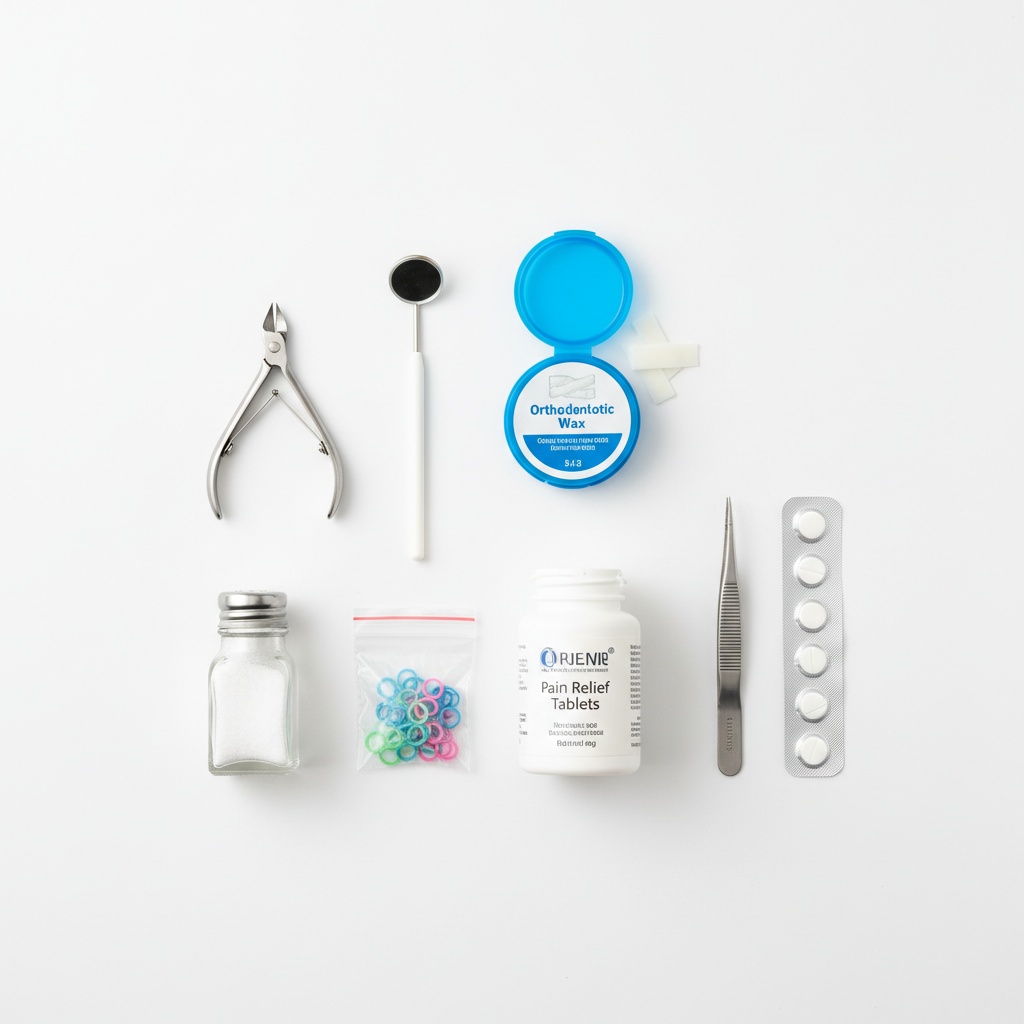
Keep these essentials within reach to react quickly to any problem:
Tip: prepare a small kit to keep in your bag or locker.
The vast majority of orthodontic problems are not medical emergencies. However, certain situations require prompt attention:
Fall, blow to the face, sports accident — especially if teeth are loose or bleeding. Call us immediately or see your general dentist.
Intense pain not relieved by pain medication, or pain that persists beyond 7 days after an adjustment.
Significant swelling, pus, fever, abnormal redness — signs of infection requiring prompt attention.
If you swallow or inhale a piece of your appliance, this is a medical emergency. Call 911 immediately or go to the emergency room.
Discover our complete guide to managing orthodontic emergencies. Poking wire, loose bracket, persistent pain — learn when to act on your own and when to seek professional care quickly. By Dr David Benguira, Orthodontist.
Read the full article →Call us during business hours. For after-hours emergencies, follow the voicemail instructions.
Centre Orthodontique Rive-Nord • 464 rue du Parc, suite 122, St-Eustache
A certified orthodontist with over 20 years of experience, Dr Benguira completed his orthodontic training at the Université de Montréal following a doctorate in dental medicine. A recognized specialist on the North Shore, he combines clinical expertise and cutting-edge technology to deliver exceptional results for every patient.